Discover how microneedling can help reduce fine lines, improve skin texture, and boost collagen – plus what to expect before, during, and after treatment
MICRONEEDLING QUICK FACTS: TL;DR
What is microneedling? Microneedling – also called collagen induction therapy – is a cosmetic treatment that involves puncturing the skin with ultra-fine needles to trigger your body’s natural wound-healing process.
Best for: Fine lines, sagging skin, enlarged pores, acne scars
Cost in the UK: £150 – £400 per session
Downtime: Minimal – redness for up to 48 hours
Results: Gradual, over 4–6 weeks
How long after microneedling can I wear makeup? Usually 24–48 hours, once redness and sensitivity have reduced. Always check with your practitioner.
As we age, our skin naturally loses elasticity, becomes thinner, and shows the wear and tear of sun exposure, stress, and inflammation.
A solid skincare routine will, of course, help manage these changes (as will wearing sunscreen every day…) but sometimes the skin needs a deeper reset.
And that’s where microneedling comes in.
In this guide, we explain exactly how microneedling works – not just what happens on the surface, but what’s going on underneath.
You’ll learn about the different types of microneedling, what it feels like, how long it takes to see results, and how to care for your skin afterwards.
We’ll also cover who microneedling is best for, what to avoid, and why it’s such a popular option for people with mature, scarred, or tired-looking skin.
Whether you’re curious about collagen, researching your first microneedling treatment, or comparing microneedling to other non-invasive options like Botox or chemical peels, this guide covers everything you need to know to make an informed decision.
FURTHER READING: Best treatments for mature skin from lasers to peels and microneedling explained
 Shutterstock
 Microneedling, or collagen induction therapy as it’s also known, is a cosmetic treatment that involves puncturing the skin with ultra-fine needles to trigger your body’s natural wound-healing process. This sounds intense – and to be honest, the microneedling before and after effect, especially for the first 12 hours or so look intense… – but the damage is controlled, superficial and temporary.
Whenever the skin is “damaged” or goes through even mild trauma, your immune system kicks into to heal it. This involves sending more collagen and elastin, the two proteins that make up the scaffolding of skin and keep it firm, plump, and elastic to the affected areas.
It’s one of the reasons why the likes of Heaven Skincare’s Bee Venom treatments, as well as those from Rodial, are also seen as good options for ageing skin, and alternatives to Botox, because the venom causes the skin to react. Not to the same extent as microneedling, though.
Microneedling is considered one of the most effective non-surgical treatments for improving skin tone, texture, and firmness – with minimal downtime and long-term results. It’s also cheaper than some other treatments (although, not cheap…it’s all relative!)
The beauty of it, excuse the pun, is that it’s also backed by science, suits most skin types, and can tackle a wide range of concerns. In particular, microneedling is best for:
When skin is injured, even microscopically, your body responds by creating new tissue. This is a fundamental biological process called collagen remodelling.
Microneedling works by creating hundreds of tiny, controlled injuries in the skin using medical-grade needles.
Over a few weeks following the treatment, your body lays down new collagen and elastin fibres. These act like scaffolding to support the skin from within, smoothing out lines, refining pores, and improving skin texture. It’s why the results appear gradually, because your skin is rebuilding itself from the inside out. But it’s also why the results last a decent amount of time.
FURTHER READING: The ultimate guide to mature skin | Over 50s beauty hub | Our pick of the best makeup for over 60s | How your skin changes in each decade of your life – and what to do about it | Menopause hub: Everything you need to know about perimenopause and beyond
 Shutterstock
 There are a number of microneedling benefits. It can:
It’s also one of the few treatments that help with enlarged pores. It can’t shrink them as such, technically nothing can because the size and shape of your pores is genetic, but by making the skin around them more plump and less saggy, it helps make them appear smaller.
If you look at the skin of children, it looks like they don’t have pores. They do have them, of course, but because their skin is so plump, you can barely see them.
What’s more, repeated microneedling treatments further strengthen the skin’s structure, leading to firmer, more youthful-looking skin with better tone and resilience benefits over time.
FURTHER READING: The hard truth about pores and why you can’t shrink them – no matter what skincare brands claim
There are two main types of professional microneedling:
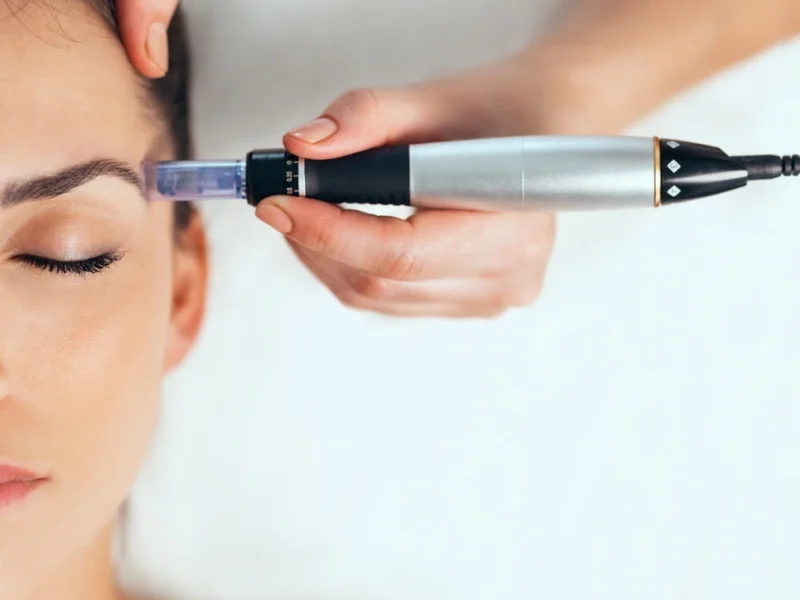
This method uses a pen-like device (such as the Dermapen) that moves vertically to create even micro-injuries. The needle depth can be adjusted based on the treatment area and concern. For instance, if you’re looking for glow, the needles don’t need to go too deep. However, if you have acne scars or your skin is sagging, the needles benefit from going deeper.
Radiofrequency (RF) microneedling combines microneedling with radiofrequency energy. As the needles penetrate, they emit heat deep within the dermis. This boosts how much collagen is stimulated and tightens the skin further making it a good choice for treating sagging skin, stretch marks, and deeper lines.
Home rollers (derma rollers) exist but are not recommended due to risks of uneven punctures, infection, and poor results.
As you can imagine, stabbing needles into the skin (no matter how tiny) isn’t going to be a comfortable or relaxing experience yet that doesn’t mean microneedling is super painful either.
Before your treatment, you practitioner will apply a numbing cream. You may then feel light pressure or a scratching sensation, especially on thinner areas like the forehead or around the eyes.
The treatment takes 30–60 minutes depending on the area and device used.
Right after your session, your skin will look red and feel slightly warm, as if you’ve got sunburn. And like sunburn, this usually subsides within 24 to 48 hours.
You may also experience:
Your practitioner will help you understand how to look after your skin, and if there’s any signs that you need to look out for. Generally speaking though, it’s crucial to keep your skin clean and hydrated.
Avoid sun exposure, makeup, and active ingredients (like retinol or acids) for at least 1–2 days.
 Getty Images/iStockphoto
 This is one of the most searched-for microneedling questions – and for good reason.
Because you need to keep the skin clean in order to avoid the teeny tiny abrasions attracting dirt or bacteria, it’s important to keep it free from makeup for at least 24-48 hours after treatment. This allows time for the skin barrier to start healing and reduces the risk of irritation or infection. When you do apply makeup, opt for:
You might notice a “glow” or plumping effect within a few days, but true results take longer to develop. This is because collagen takes time to form and reorganise. It also depends on the individual’s skin, but as a general rule expect to see:
Most practitioners recommend a course of three to six treatments, spaced 4–6 weeks apart, for best, longer term results.
 FaceGym
 With the rise of at-home beauty tech, it’s no surprise that microneedling-at-home kits have started going on sale.
These DIY devices promise smoother skin and smaller pores without the clinic visit, but they’re not without risk, and the results aren’t always what they seem.
Most microneedling-at-home kits contain derma rollers: handheld tools with a rotating barrel covered in tiny needles (usually 0.2–0.5mm). As you roll the device over your skin, it creates small punctures that aim to boost product absorption and mildly stimulate collagen production. There are also microneedling pens that are typically paired with skincare serums like hyaluronic acid or peptides to enhance their effects.
Popular kits and devices include the FaceGym Faceshot microneedling-at-home device and the Real Beauty London Microneedling Infusion Kit.
However, as a rule, home needles are much shorter than those used professionally. They often don’t reach deep enough to meaningfully trigger collagen production, so you won’t see the same results for acne scars, deep wrinkles, or sagging skin.
Microneedling-at-home benefits may include temporarily improved skin texture, added glow or reduced dullness and increased serum absorption.
Yet, at the same time, using microneedling tools at home carries a higher risk of infection and skin damage, especially if not used correctly. Common issues include:
If that doesn’t put you off, just make sure you’re considering the following:
If in doubt, speak to a qualified aesthetician before trying microneedling at home, especially if you have sensitive skin, pigmentation concerns, or a history of scarring.
Microneedling is well tolerated by most people and can be safely used on all skin tones, but it’s not recommended if you:
Victoria is founder and editor-in-chief of mamabella, freelance journalist and Mum. She has a passion for empowering people to feel beautiful whatever their age, size, skin type and budget